Knowledge & Organizational Memory (GBrain)
Story moment
Memory stops being a person
GBrain matters because repeated context should become system memory, not another tax paid by the operator.
Executive Summary
What this chapter establishes
GBrain and Knowledge let the organization stop asking humans to repeat context.
Autonomous organizations require memory. Without it, the system repeatedly asks the human to re-explain the same thing.
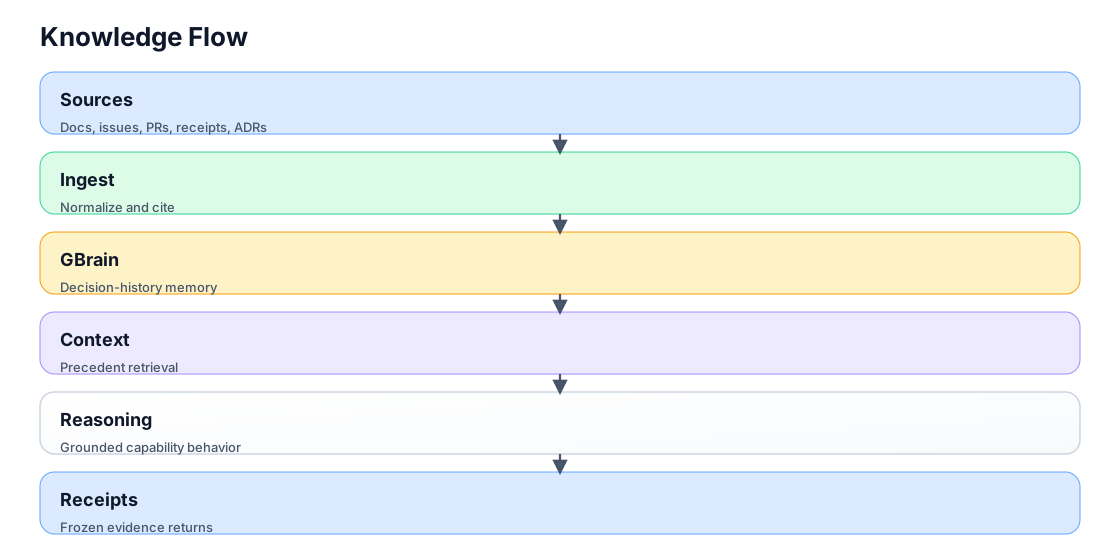
Knowledge succeeds when the human stops repeating context: an agent remembers prior architectural decisions; issue clarification cites prior similar issues; a build plan references relevant receipts; a Ralph decision brief includes precedent; the platform recognizes that a repeated correction is a burden.
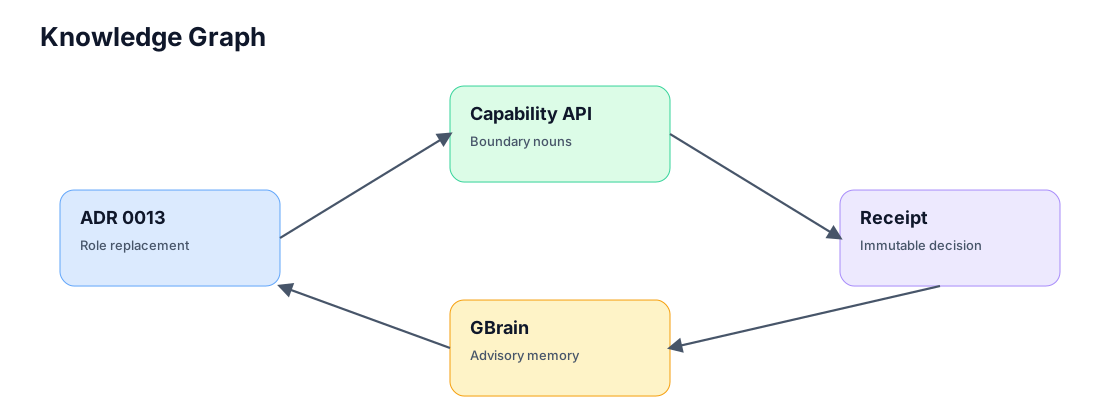
The crucial boundary discipline. GBrain is GLoops’ internal decision-history memory. It surfaces prior decisions as advisory precedent (
influence: informed, nevergrounded); it cannot auto-ground actions or self-modify, and it is not a boundary surface — consumers read decision history by reading Receipts through the Capability API, never by reading GBrain directly. Authoritative grounding comes from Knowledge (knowledge://…URIs), not from memory of past decisions.
Five lenses — Knowledge
| Lens | |
|---|---|
| ▣ Current Reality | Immutable receipts + the GBrain decision-history outbox drainer are built. But reasoning currently receives zero knowledge documents — wiring knowledge into reasoning is the build→trust step (built (flagged)). |
| ◇ Target State | Organizational memory that compounds — ingesting documents, issues, PRs, receipts, ADRs, decisions, conversations, and code into a living substrate that grounds and informs every capability. |
| → Migration Path | Ingest ADRs + CURRENT_STATE → ingest receipts → ingest issues/PRs → cross-link → context assembly for agents → user-correction memory. |
| ⚖ Executive Implication | You explain the architecture once, not every session. Repeated corrections become capability improvements instead of recurring conversations. |
| ☼ Operator Experience | Agents arrive already knowing the decision history; you stop being the organization’s memory. |
Part III — The Operating Model
Section titled “Part III — The Operating Model”Chapter closeout
Decision ledger
Key Decisions
- GBrain is advisory memory, never authoritative grounding or a boundary surface.
Open Questions
- Which knowledge sources enter reasoning first without weakening provenance?
Related
- Knowledge Graph Mockup
- Receipt Explorer Mockup
- The Operating Manual Rule